Digitech Kit Fees: What You’re Actually Paying For
On commercial photo productions, it’s common to see a digitech day rate plus a kit fee.
For some producers and clients, that second line item raises questions.
What exactly is included?
Why isn’t it just part of the day rate?
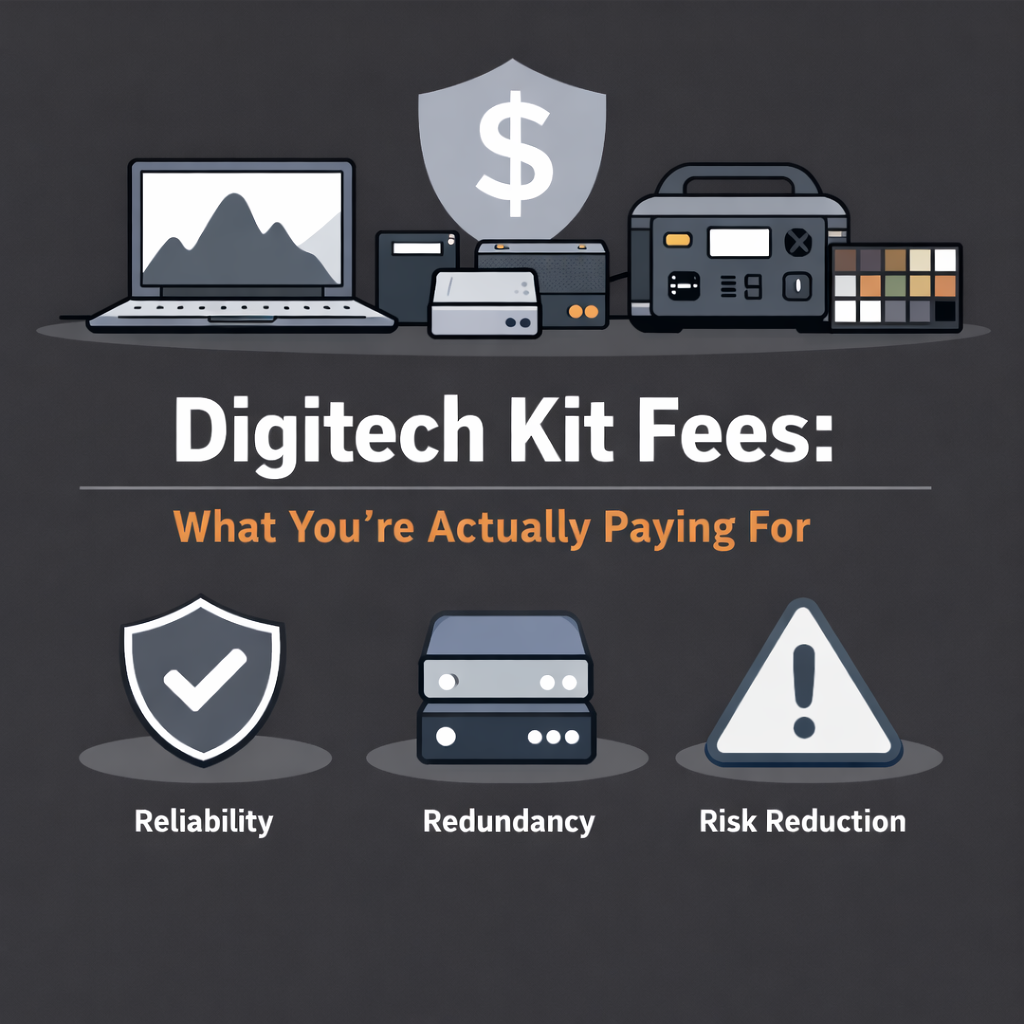
The short answer: a digitech kit fee isn’t about gear for gear’s sake—it’s about reliability, redundancy, and risk reduction.
Here’s what you’re actually paying for.
A Digitech Kit Is a Mobile Technical Department
A professional digitech doesn’t show up with just a laptop.
They arrive with a fully built, tested, and production-ready workstation designed to handle live capture, client review, and data security—often in unpredictable environments.
The kit fee covers the tools that make that possible.
1. Capture & Computing Infrastructure
At the core of the kit is a high-performance system capable of handling large files quickly and reliably.
This typically includes:
A professional-grade laptop
Capture software and licensed tools
High-speed card readers
Working drives and dedicated backup drives
What this protects:
Slowdowns, crashes, and delays during capture and review.
2. Tethering & Connectivity Systems
Stable tethering is critical on commercial sets—and it requires more than a single cable.
A kit fee often includes:
Primary and backup tether cables
Strain relief and cable management tools
Extensions and adapters
What this protects:
Momentum. Nothing stalls a set faster than unstable connections.
3. Client & Creative Monitoring
When clients, agency, or creative teams are reviewing images live, presentation matters.
Monitoring gear typically includes:
Color-accurate reference monitors
iPads or secondary review screens
Mounts, stands, and light control
What this protects:
Clear communication, faster approvals, and client confidence.
4. Power & Location Independence
Many productions don’t offer reliable access to power—or any power at all.
A digitech kit often includes:
Portable power stations or battery backups
Power strips, extensions, and charging systems
What this protects:
The ability to keep shooting regardless of location constraints.
5. Data Safety & Redundancy
One of the most critical (and least visible) parts of the kit is data protection.
This includes:
Redundant backup drives
Structured backup workflows
Clearly labeled and organized media
What this protects:
The shoot itself. Data loss can mean reshoots, delays, or worse.
6. Tools, Accessories & Problem-Solvers
The small things add up.
Most kits include:
Gaffer tape
Lens wipes and cleaning tools
Multi-tools and clamps
Extra batteries and adapters
What this protects:
Time. These tools solve problems before they become interruptions.
Why Kit Fees Are Separate From Day Rates
A digitech’s day rate compensates their labor, experience, and on-set responsibility.
A kit fee covers:
The cost of purchasing professional equipment
Ongoing maintenance and replacement
Software licenses and updates
Transport, setup, and teardown
Separating the two keeps pricing transparent and scalable based on production needs.
The Real Value of a Kit Fee: Reduced Risk
Ultimately, a digitech kit fee isn’t about equipment—it’s about insurance through preparation.
It reduces the risk of:
Technical delays
Lost or corrupted files
Client confusion during review
Power or connectivity failures
In many cases, the kit fee costs far less than even a short production delay.
Final Thoughts
When a digitech kit is dialed in, you barely notice it.
Images appear instantly.
Files stay organized.
Backups run quietly in the background.
That smoothness isn’t accidental—it’s what the kit fee supports.
For commercial productions, it’s one of the simplest ways to protect time, budget, and peace of mind.