Common Digitech Mistakes (and How to Avoid Them)
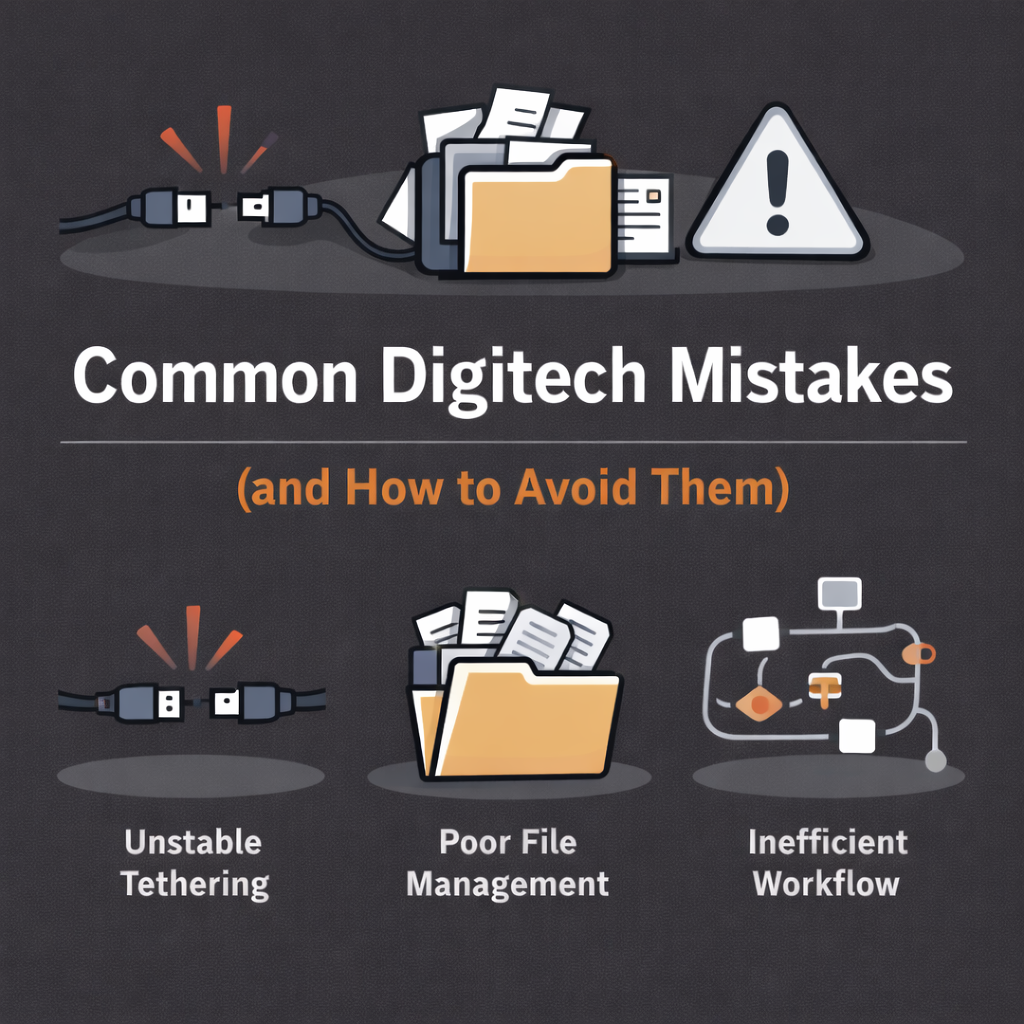
A good digitech can make a commercial shoot feel effortless.
A bad one can quietly derail an entire production.
Most digitech mistakes aren’t dramatic—they’re small breakdowns that compound over the course of the day. The good news? Nearly all of them are preventable with experience, preparation, and awareness.
Here are some of the most common digitech mistakes seen on commercial sets—and how strong digitechs avoid them.
1. Unstable or Sloppy Tethering
The mistake:
Dropped connections, slow transfers, or cables constantly getting kicked loose.
Why it hurts the shoot:
Nothing kills momentum faster than waiting on images to appear—or disappear.
How to avoid it:
Use high-quality, tested tether cables
Secure cables properly
Build in strain relief
Test the full workflow before call time
Solid tethering should feel invisible.
2. Poor File Organization
The mistake:
Messy folder structures, unclear file names, or no separation between capture, selects, and finals.
Why it hurts the shoot:
Confusion during review leads to confusion in post—and wasted time after wrap.
How to avoid it:
Establish naming conventions ahead of time
Organize by shoot, look, or scene
Track selects clearly in real time
Producers and photographers should never have to guess where files live.
3. Ignoring Color and Exposure Consistency
The mistake:
Assuming exposure or color can “just be fixed later.”
Why it hurts the shoot:
Inconsistencies slow editing, create client concerns, and risk reshoots.
How to avoid it:
Monitor exposure and color throughout the day
Flag issues early and discreetly
Maintain consistency across looks and setups
Quality control is part of the job—not an optional extra.
4. Becoming a Distraction on Set
The mistake:
Talking too much, over-explaining, or inserting opinions unnecessarily.
Why it hurts the shoot:
It pulls focus away from the photographer and disrupts creative flow.
How to avoid it:
Communicate clearly, then step back
Know when to speak and when to observe
Keep problem-solving quiet and efficient
The best digitechs are felt more than heard.
5. Not Supporting the Photographer Properly
The mistake:
Treating the role as purely technical and forgetting the creative partnership.
Why it hurts the shoot:
Photographers need mental space to do their best work.
How to avoid it:
Handle technical questions from clients and agency
Anticipate needs instead of reacting
Protect the photographer’s focus
A digitech succeeds when the photographer succeeds.
6. Lack of Backup and Redundancy
The mistake:
Relying on a single drive, battery, or system.
Why it hurts the shoot:
Data loss or power failure can end a production day instantly.
How to avoid it:
Implement on-set backups
Carry redundant cables and drives
Plan for power failures
Redundancy isn’t overkill—it’s professionalism.
7. Failing to Communicate Before the Shoot
The mistake:
Showing up without clarity on deliverables, specs, or expectations.
Why it hurts the shoot:
Last-minute surprises slow the day and increase stress.
How to avoid it:
Check in with the producer or photographer beforehand
Clarify capture specs and handoff requirements
Align on client monitoring needs
Preparation off set leads to confidence on set.
Final Takeaway
Most digitech mistakes come down to one thing: lack of foresight.
The strongest digitechs think ahead, stay calm, and make the technical side of the shoot feel easy—so the creative work can shine.
When the digitech workflow is solid, the entire production benefits.