How a Digitech Makes Commercial Photoshoots Run Smoothly
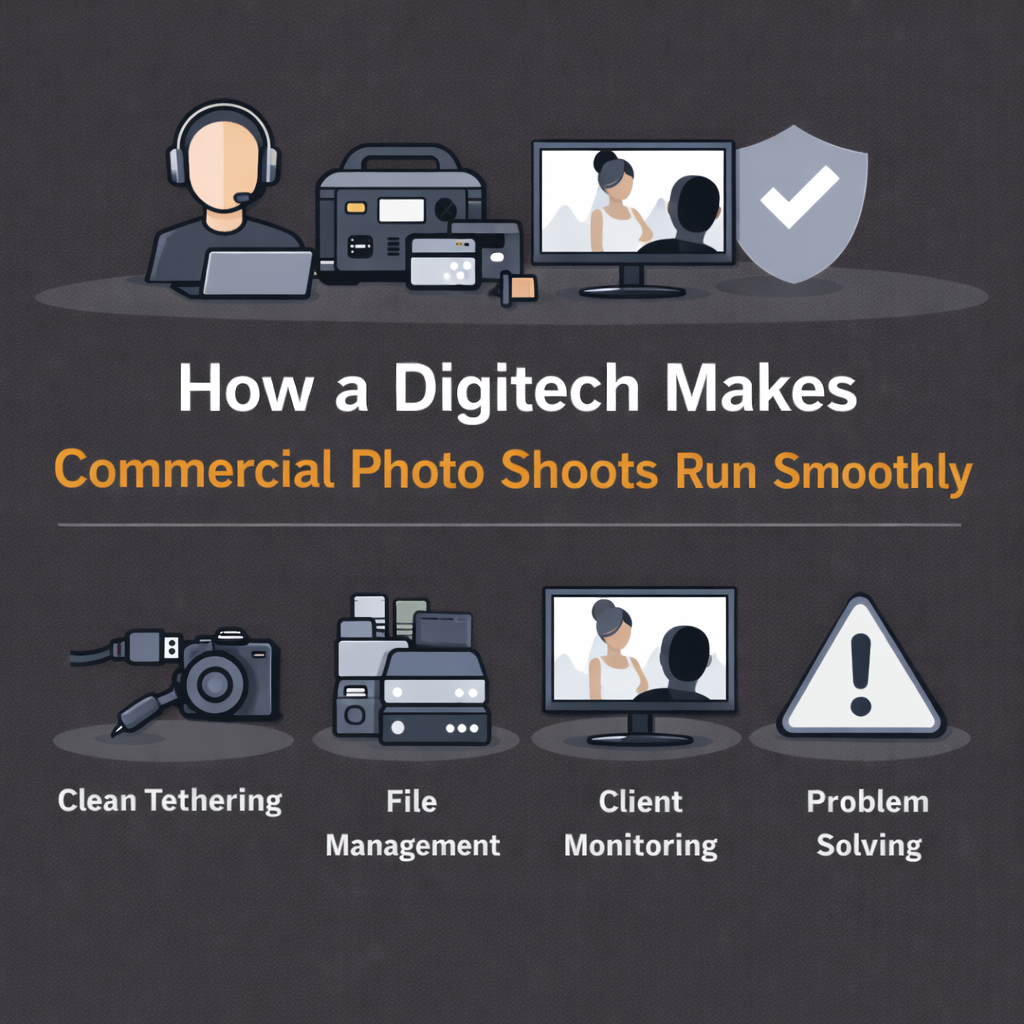
Commercial photo shoots are a balancing act.
Creative ambition, tight schedules, multiple stakeholders, and technical complexity all have to coexist—often under pressure.
When things run smoothly, it rarely feels accidental.
Behind the scenes, there’s usually a digitech making sure the technical side of the shoot never becomes the bottleneck.
Here’s how a digitech quietly helps commercial productions stay efficient, organized, and stress-free.
1. Clean, Reliable Tethered Capture
On most commercial shoots, images are reviewed live. That means:
Stable connections
Fast transfers
Zero file confusion
A digitech manages the tethered workflow so images:
Appear instantly
Are labeled correctly
Are saved redundantly
When tethering is solid, everyone relaxes. When it’s not, the entire set feels it.
2. Real-Time Quality Control
A digitech keeps an eye on:
Exposure consistency
Focus accuracy
Color balance
Framing issues
Catching problems on set is far easier—and cheaper—than discovering them in post. This layer of technical oversight protects both the photographer and the client.
3. Organized Files From the Start
Commercial productions generate a lot of data, fast.
A digitech ensures:
Logical folder structures
Clear file naming conventions
Selects and notes tracked in real time
This organization carries through to post-production, saving hours (or days) after the shoot wraps.
4. Better Communication Across the Set
A digitech acts as a technical translator between:
Photographer
Creative director
Agency
Client
Instead of crowding the photographer with questions, stakeholders can:
Review images on a monitor or iPad
Compare selects side-by-side
Make informed decisions quickly
This keeps the shoot moving without creative friction.
5. Less Mental Load on the Photographer
Commercial photographers already juggle:
Lighting
Composition
Direction
Client feedback
By handling the technical workflow, a digitech allows the photographer to stay in a creative flow—often resulting in better images and a calmer set.
6. Built-In Redundancy and Data Safety
Professional digitechs don’t rely on a single hard drive or laptop.
They implement:
On-set backups
Redundant storage
Fail-safe workflows
This minimizes the risk of data loss and gives producers and clients peace of mind.
7. Faster Problem Solving When Things Go Wrong
Cables fail. Software crashes. Batteries die.
A digitech anticipates these issues and solves them quickly—often before most of the set even notices. That momentum matters on tight production schedules.
Smooth Shoots Feel Effortless—But They’re Not Accidental
When a commercial shoot runs well, it’s usually because:
Roles are clearly defined
Technical systems are dialed in
The photographer is supported
A digitech doesn’t just manage files—they help maintain the rhythm of the entire set.
Final Takeaway
A good digitech is invisible when things are going right—and invaluable when they’re not.
For commercial productions, that quiet reliability is often what turns a long, stressful day into an efficient and confident one.